Dear Pani Krystyna – I hope you are doing much better after your recent health scare. I think of you as this bright, vivacious, energetic woman and I cannot even imagine you getting so very, very sick. I want you to know how highly I think of you and also how much others think the same of you also.
Just this month I met two women, one works with Dean (I think her name is Johana – she goes to St Hedwig church) and the other woman is a technician at my dental office – I mentioned your name and they could not say enough good things about you. You are a beloved legend!
I carry some Polish and Lithuanian blood in my veins, though you would not know it from my name. I do not bear a Polish surname, and I speak the language only imperfectly. My ancestors walked many roads across Europe and America. Yet with every passing year I find myself more deeply bound to Poland, not only by heritage, but by conscience.
Part of that connection lives quietly in my blood, inherited from those who once lived in the lands of the old Polish–Lithuanian Commonwealth, but the greater bond has grown from something else: from history, from memory, and from a sense of responsibility to truth.
I love Poland because she has known unspeakable suffering and yet has never surrendered her soul. I love her because her soil holds the bones of poets and partisans, mothers and martyrs, men and women who died not for power, but for dignity, for truth, and for home.
I defend Poland because so few do. History has not always been kind to her, and memory has not always been fair. Her sacrifices are too often forgotten, her courage misrepresented, and her people blamed for crimes not their own while their own wounds are ignored.
I honor the Polish people because they remind the world what resilience looks like. They rebuilt cities from ashes, whispered prayers in prisons, taught children beneath the shadow of tyranny, and refused to let the flame of their culture be extinguished no matter how many tried.
I give my time freely to this cause not for thanks or praise, but because some stories must be told and some truths must be defended, especially when it is no longer fashionable to do so.
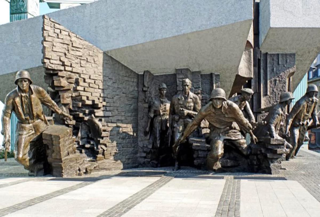
Poland stood when others fell. She remained upright when the world turned its back. She bled for freedom not only for herself, but for Europe, for civilization, and for the belief that the human spirit cannot be broken.
And perhaps that is why the story calls to me.
Part of it lives in my blood and the rest lives in my conscience.